
Amid the technological revolution, cutting-edge transportation systems promise to transform urban landscapes. As innovation in perception and interaction between humans and machines progresses, pivotal debates emerge surrounding societal impact, encompassing moral, legal, and technological considerations critical to integrating autonomous solutions within daily life.
Decoding Ethical and Regulatory Challenges in Self-Driving Technology
Autonomous vehicles (AVs) are set to transform the landscape of mobility, offering promises of improved safety, efficiency, and accessibility. However, achieving widespread adoption involves navigating a complex array of ethical and regulatory challenges. This section explores the crucial considerations shaping the future of self-driving cars.
The Trolley Dilemma and Its Real-World Ramifications
One of the most talked-about ethical challenges in autonomous vehicle development is the “trolley problem,” which places AVs in situations where they must choose between equally undesirable outcomes. For example, should a vehicle prioritize the safety of its passengers over pedestrians, or vice versa? These theoretical dilemmas have tangible implications in real-world programming and regulatory frameworks. It’s not just a philosophical debate—the outcomes of these scenarios influence how we legislate and ethically design these machines. Striking a balance between occupant protection and societal safety illustrates the need for rules grounded in law, ethical perspectives, and technological feasibility.
Algorithmic Bias and the Quest for Transparency
Compounded by the complexity of AI, the decision-making algorithms used in autonomous vehicles often suffer from a lack of transparency and potential biases. The risk here is not inconsequential; bias in these systems can lead to inequalities, such as failing to recognize diverse pedestrian populations effectively. Addressing algorithmic bias begins with improved data quality, rigorous testing, and ongoing monitoring to align AI goals with societal values. Transparency in artificial intelligence findings has become paramount, with a growing consensus on the need for auditability and accountability to ensure algorithms are equitable and just.
Navigating Data Privacy and Security Concerns
As AVs collect vast amounts of data from their surroundings, concerns around data privacy and cybersecurity are pervasive. The question arises: How do we secure this data against unauthorized use or breaches? Regulatory frameworks must define strict protocols for data protection, ensuring both privacy and security are not compromised. Beyond just privacy, the threat of data being manipulated or hacked with malicious intent poses significant risks, demanding robust security measures capable of protecting the integrity of these autonomous systems.
Assigning Liability and Accountability in Autonomous Contexts
Determining responsibility in the aftermath of an AV-related incident presents unique challenges, as existing legal systems may not adequately address the nuances of autonomous driving responsibilities. Is the liability with the vehicle’s manufacturer, the software developer, the owner, or the passenger? Establishing clear liability rules helps ensure compensation for victims while holding manufacturers and developers accountable. These rules also help bridge the gap between technological innovation and the public’s trust in the safety and reliability of autonomous systems.
Evolving Regulation for Safe Autonomous Integration
Effective regulation is a cornerstone for the safe deployment of AVs, proactively addressing everything from testing procedures to liability. It’s important to strike a balance that fosters innovation while ensuring public safety isn’t compromised. Overly restrictive regulations could stifle progress, whereas overly lenient ones could place the public at risk. An evolving regulatory landscape that reflects both technological advancements and ethical standards is crucial. Moreover, international cooperation is essential to establish consistent standards, addressing cross-border operational challenges.
Sensor Fusion and LiDAR: The Backbone of Self-Driving Innovation
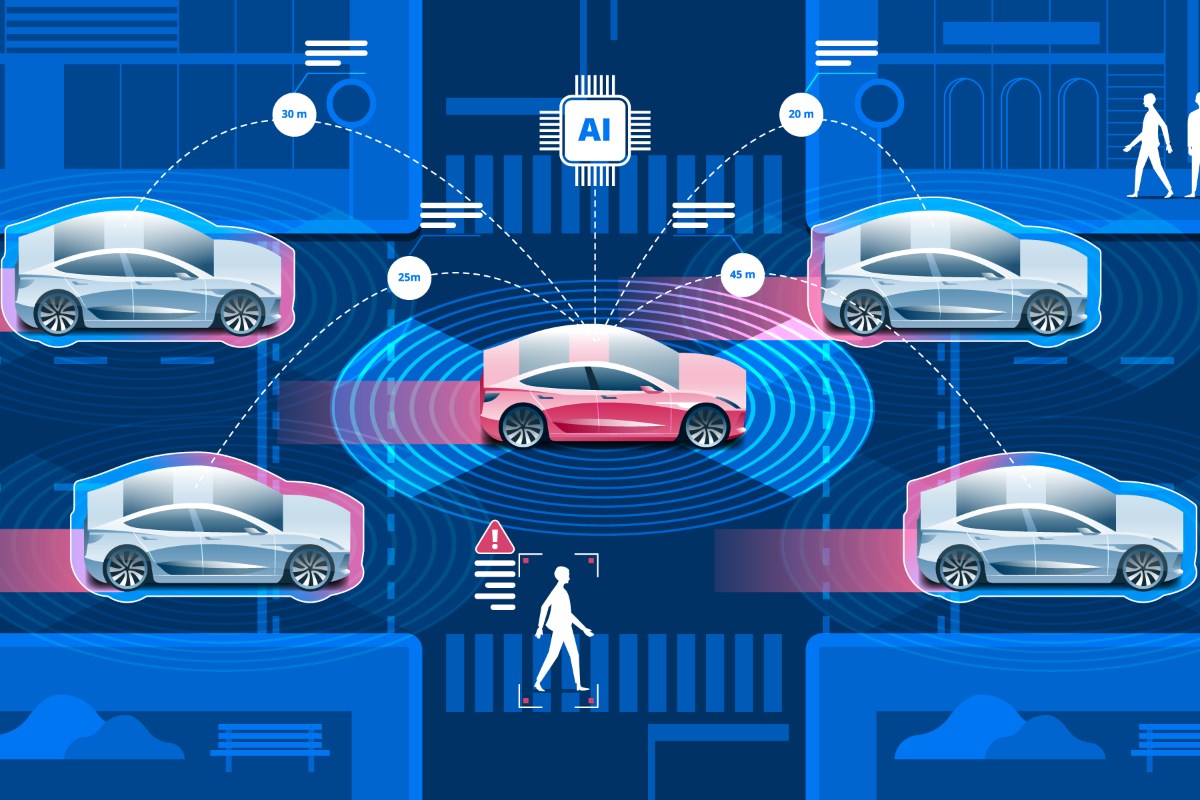
Autonomous vehicles rely heavily on sophisticated perception systems, particularly the integration of multiple sensory inputs known as sensor fusion and the use of LiDAR (Light Detection and Ranging) technology. These technologies form the backbone of self-driving capabilities, ensuring vehicles can accurately perceive and navigate their environment.
LiDAR: Enhancing Environmental Awareness
LiDAR technology stands out in the sensor suite of AVs, playing a critical role in environmental mapping and obstacle detection. By emitting laser beams that bounce back after hitting an object, LiDAR provides high-resolution 3D maps, pivotal for localization and path planning. This capability allows AVs to detect and analyze complex surroundings, even under poor lighting conditions, enhancing overall safety and operability. LiDAR’s adaptability to various environmental conditions makes it indispensable, especially in urban settings rife with dynamic variables.
Sensor Fusion: Comprehensive Environmental Perception
Sensor fusion is the process of combining data from multiple sensors—such as cameras, radar, and LiDAR—to create an accurate representation of the AV’s environment. This merging of information is essential for compensating the shortcomings of individual sensors and for achieving robust perception and decision-making. Techniques employed in sensor fusion range from low-level data fusion, which directly integrates raw sensor data, to high-level decision fusion, synthesizing processed information into coherent actions. The integration of these types leads to highly reliable systems that enhance navigation and safety.
Overcoming Challenges in Sensor Integration
The integration of sensory data presents several challenges, such as synchronizing data streams and associating multiple sensor outputs to the same object or event. Managing the uncertainties in sensor data and achieving computational efficiency are key obstacles developers must overcome. Innovative algorithms, such as Kalman filters and deep learning models, are instrumental in addressing these challenges, providing a framework to improve both precision and reliability. As such, advancements in computing power and algorithmic complexity continue to support the evolution of sophisticated sensor fusion processes.
Human-Machine Symbiosis in the Age of Autonomous Driving
The successful adoption of autonomous vehicles involves not only technological sophistication but also seamless human-machine interaction. The interface between driver and vehicle is pivotal for ensuring safety, trust, and ease of use, making human factors a crucial aspect of AV development.
Designing Intuitive Interfaces for Enhanced User Experience
Human-machine interaction in AVs must prioritize intuitive interfaces that adapt to the user’s needs and driving context. Such interfaces can enhance user experience by dynamically adjusting information displays based on real-time conditions. Employing a combination of visual, auditory, and haptic feedback ensures that the system communicates effectively and prevents driver confusion, which is vital for safe operation and user acceptance.
Building Trust with Transparent Systems
Building trust between AVs and their users is essential for their widespread adoption. This involves creating transparent systems where users can understand and predict the vehicle’s actions. Explainable AI (XAI) plays a vital role in making these systems more understandable, allowing passengers to gain insight into decision-making processes. This transparency helps in decreasing apprehensions and fosters confidence among users, subsequently promoting the technology’s acceptance.
Managing Cognitive Load and Ensuring Situational Awareness
Maintaining driver engagement and situational awareness remains a challenge, particularly when AVs operate at varying levels of autonomy. Interface designs must minimize cognitive load by presenting critical information in a concise manner while avoiding unnecessary distractions. Features that support situational awareness, such as augmented reality displays highlighting potential hazards, enhance the driver’s ability to make informed decisions, even when the AV temporarily hands over control.
The Role of Continuous Feedback and Collaboration
Continuous user feedback is critical in shaping effective human-machine interfaces. User-centered design processes ensure interfaces are both intuitive and responsive to driver needs. Data-driven insights from user interactions can guide the iterative improvement of system interfaces, addressing emerging issues and optimizing user experience. Collaboration between developers and end-users thus becomes an integral part of refining AV technologies to ensure safety, reliability, and user satisfaction.
Autonomous vehicles represent a pivotal shift in transportation technology, promising numerous advantages yet posing significant ethical and regulatory challenges. By addressing these issues through thoughtful design, transparent processes, and robust regulation, society can successfully integrate autonomous vehicles, making them a familiar and beneficial part of everyday life.
Q&A
-
What are the different levels of autonomy in self-driving vehicles?
The levels of autonomy in self-driving vehicles are classified from Level 0 to Level 5. Level 0 represents no automation, where the driver is responsible for all tasks. Level 1 provides driver assistance, such as adaptive cruise control. Level 2 includes partial automation with systems like lane-keeping assistance. Level 3 offers conditional automation, allowing the vehicle to control all aspects but requiring the driver to take over when prompted. Level 4 is high automation, where the vehicle can handle most driving situations independently. Finally, Level 5 represents full automation, where no human intervention is needed at any time.
-
How does LiDAR technology contribute to self-driving cars?
LiDAR technology is crucial for self-driving cars as it provides high-resolution, 3D mapping of the vehicle’s surroundings. It uses laser pulses to measure distances to objects, creating a detailed spatial understanding that is vital for navigation and obstacle detection. This precision helps autonomous vehicles to operate safely by accurately identifying pedestrians, cyclists, and other vehicles, even in challenging weather conditions or at night.
-
What are the ethical challenges associated with autonomous vehicles?
Ethical challenges in autonomous vehicles include decision-making in unavoidable accident scenarios, privacy concerns regarding data collection, and the potential for job displacement. These vehicles must be programmed to make complex ethical decisions, such as choosing between two harmful outcomes. Additionally, there’s a need to balance data privacy with the efficiency of these vehicles, while also considering the societal impact on employment in driving-related sectors.
-
What role does sensor fusion play in the functionality of autonomous vehicles?
Sensor fusion is essential in autonomous vehicles as it integrates data from various sensors like cameras, LiDAR, radar, and ultrasonic sensors to create a comprehensive understanding of the environment. This integration improves reliability and accuracy in object detection and environmental perception, enabling the vehicle to make informed decisions. By combining the strengths of different sensors, sensor fusion helps to overcome the limitations of individual sensor technologies.
-
How are self-driving regulations evolving to accommodate new technologies?
Self-driving regulations are evolving to address safety, testing protocols, and liability issues. Regulatory bodies in the UK and the US are developing frameworks that ensure these vehicles meet safety standards while promoting innovation. This includes guidelines for testing autonomous vehicles on public roads, establishing accountability in the event of accidents, and updating traffic laws to reflect the capabilities of autonomous technologies. These evolving regulations aim to facilitate the safe integration of self-driving cars into everyday traffic.